

Safe practice
When the stakes are too high to get it wrong the first time, realistic environments let people train, make mistakes and improve — without risk to themselves or others.
Four immersive programmes for hospitals, healthcare, special-needs, school and elderly-care settings — designed with clinicians, educators and caregivers to help people prepare for new places, practise everyday skills, reconnect with memories and rebuild movement.
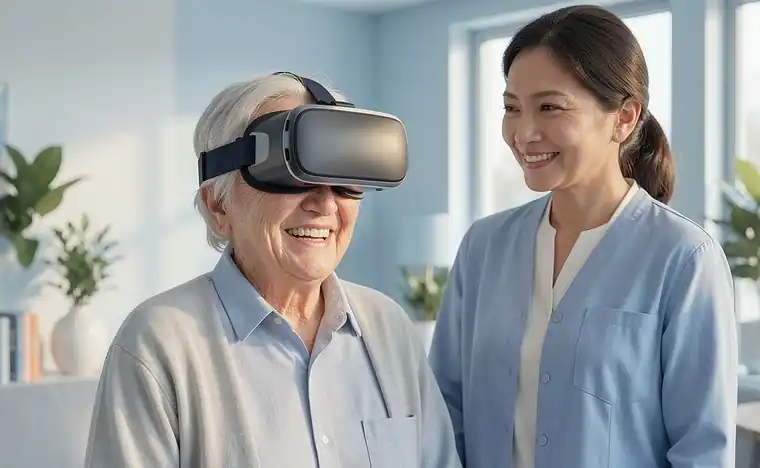
Immersive tools are most useful where understanding demands space, action, emotional presence or safe practice — exactly where traditional training and preparation fall short.
When the stakes are too high to get it wrong the first time, realistic environments let people train, make mistakes and improve — without risk to themselves or others.
For people who need more support, immersive experiences offer a judgement-free space to prepare for real-world situations at their own pace.
Some things can’t be understood from a diagram or a screen. Immersion turns the abstract into something people can see, walk through and feel.
Explore hospitals, schools and new places safely in advance.
Learn more ↓Rehearse everyday life skills in low-pressure environments.
Learn more ↓Personal Memory Rooms for people living with dementia.
Learn more ↓Motivating environments for stroke and brain-injury rehabilitation.
Learn more ↓For many children and adults with special needs, the hardest part of a new experience is the uncertainty before it. What does the classroom look like? Where is the toilet? How noisy is the canteen?
Fuse Ready uses VR to answer those questions before the moment arrives. People can explore unfamiliar environments again and again — safely, at their own pace — so that when they walk through the door for real, it can already feel like somewhere they’ve been before.
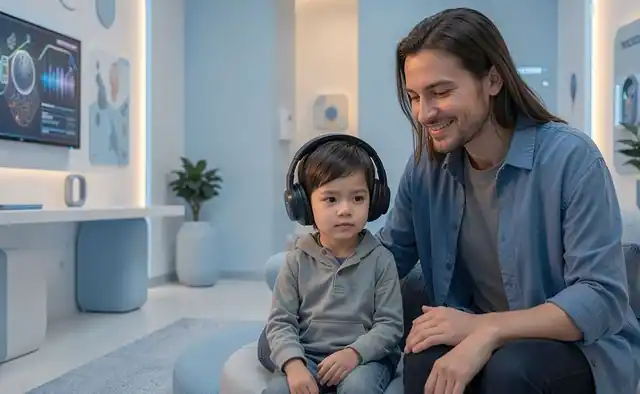
Explore wards, waiting rooms and procedures in advance to ease fear of clinical environments.
Familiarise children with the sights and sounds of the dentist’s chair before they sit in it.
Build confidence on public transport — from the platform to the carriage — without the crowd pressure.
Rehearse the room, the conversation and the walk in, so candidates can arrive more prepared.
Let new employees explore their workspace before day one.
Standalone VR headsets, tablets, touchscreen kiosks, 360° screens and spatial-audio headphones.
Confidence comes from doing, not watching. Fuse Learn gives children and young adults who need extra support a safe space to experience the real world on their own terms — practising the skills they need to step out, speak up and show up, as many times as they need.
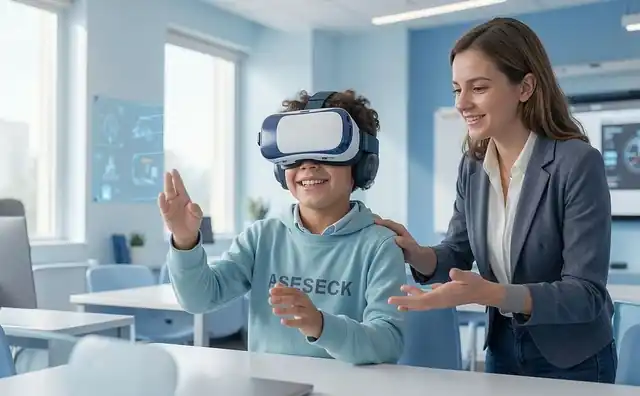
Read traffic, use crossings and stay safe on busy streets.
Practise what to do before an emergency happens.
Check-in desks, security queues and customs in a virtual airport.
Money, transactions and financial independence without real-world stakes.
Routes, ticketing and busy stations.
Conversations, greetings and everyday social moments.
Following instructions and working with colleagues.
VR or mixed-reality headsets, tablets, touchscreens, motion sensors and haptic controllers.
Dementia can take so much — but there can still be moments when a familiar song or the sight of a childhood home reaches a person in ways words no longer can. Fuse Remember creates a personalised Memory Room, built with the help of family, to bring those places and feelings closer.
A headset doesn’t treat dementia. But being somewhere that feels emotionally familiar may offer comfort — to the person and to the family sitting beside them. Every experience is designed with clinicians and caregivers, with dignity, safety and comfort at its heart.
Familiar faces from across a lifetime, at the centre of the room.
Birthdays, gatherings and ordinary days made precious.
Recordings of loved ones speaking, laughing, calling a name they know.
The songs that shaped them, playing softly in the background.
The old flat or the childhood kampung, rebuilt in detail.
Tablet “memory rooms”, large displays and 360° photo frames so family can share the experience.
Recovery from a stroke or brain injury is never just physical. Fuse Recover is designed to create safe, motivating environments where people can work on movement, relearn everyday tasks and practise the moments that matter — at their own pace.
It’s designed to be co-developed with physiotherapists, occupational therapists and rehabilitation clinicians, and to support their work — never to replace it.
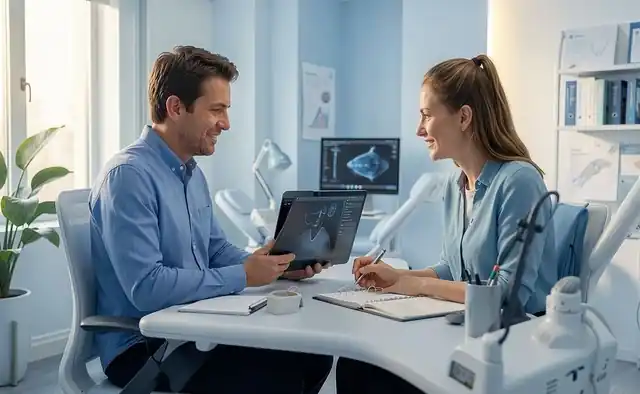
Practise movement and daily tasks in a safe, immersive environment.
Guided, repeatable VR exercises for cognitive and physical practice.
Immersive movement challenges designed to make sessions more engaging.
Practise real-world tasks — cooking, dressing, navigating spaces — in a consequence-free setting.
Supporting the belief that life after injury can still be full and meaningful.
VR/MR headsets, motion tracking, wearable sensors and a therapist dashboard on tablet.
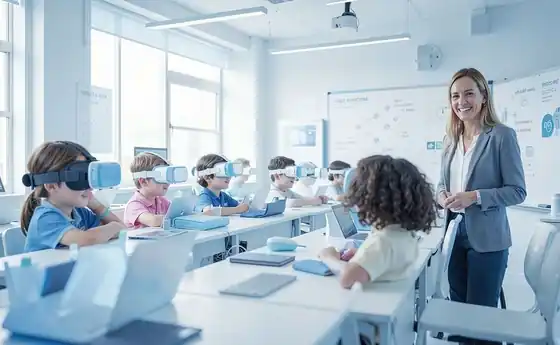
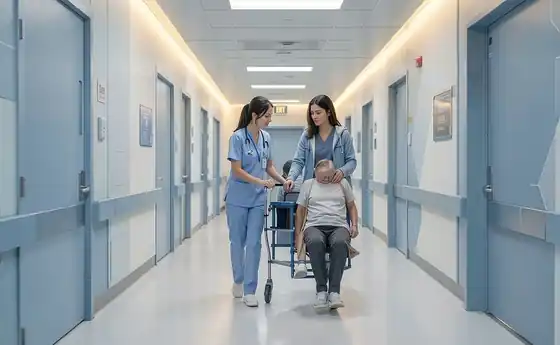
Safe, controlled spaces to explore social situations and new environments at each person’s own pace.
Immersive experiences that engage every kind of learner and make the unfamiliar feel exciting.
Helping patients and families get to know unfamiliar environments before they arrive.
Supporting practitioners with immersive tools for therapy, rehabilitation and skills development.
Reconnecting residents with meaningful places and memories.
Have a challenge immersive technology could help with? We’d like to hear about it.
Every deployment starts with a site and user-needs assessment, so each setting gets the right set-up from the start.
Full immersion in a headset, hands-on access on a tablet or touchscreen, or a shared display with spatial audio so the whole room can take part.
Individual guided sessions, therapist-led 1:1 work, or shared group and family viewing — each format purpose-built.
Enough for all standing content; seated mode needs almost nothing. Wi-Fi is only needed when cloud features are used.
Anxiety on arrival · participant and patient satisfaction · therapy adherence · staff onboarding time · attendance. We agree the measures with each partner up front, so every pilot produces evidence you can use.
We exist to use immersive experiences not for novelty, but for genuine human impact — helping people prepare for the world, build real skills, and reconnect with who they are.
Tell us about your setting and the people you support. We’ll follow up to arrange a conversation — and, if it’s a fit, a hands-on demo for your team.
Prefer email? wolfie@fusefoundry.asia